
Los Altos Hills sits up against the Santa Cruz Mountains in the inland Santa Clara Valley, away from the steady marine fog the coast gets. That trade-off is a blessing for the view and the garden, but it means long stretches of hot, dry afternoons through the summer — and a built-in Sub-Zero feels every degree of it.
We run more heat-related calls here in July and August than in any other window of the year. The pattern is consistent enough that it's worth explaining what's happening before your unit starts struggling.
Why the foothill heat is the hard part
A built-in refrigerator doesn't make cold so much as it moves heat out of the cabinet and dumps it into the kitchen air. On a 95-degree Los Altos Hills afternoon, the air the condenser has to reject heat into is already warm, so the compressor runs longer and hotter to hold the same interior temperature.
The estate kitchens common up here make it worse in a quiet way: a 48-inch built-in tucked into a tight surround, sometimes flanked by a wine column and a second freezer drawer, with limited clearance for the grille at the top to breathe. Restrict that airflow on the hottest week of the year and a unit that coasted all winter suddenly can't keep up.
What heat stress actually looks like
The early signs are subtle — the fridge holds temperature overnight but drifts a couple of degrees warm by late afternoon, or the compressor seems to run almost continuously on hot days. Ice production slows. The cabinet feels warm to the touch at the top grille.
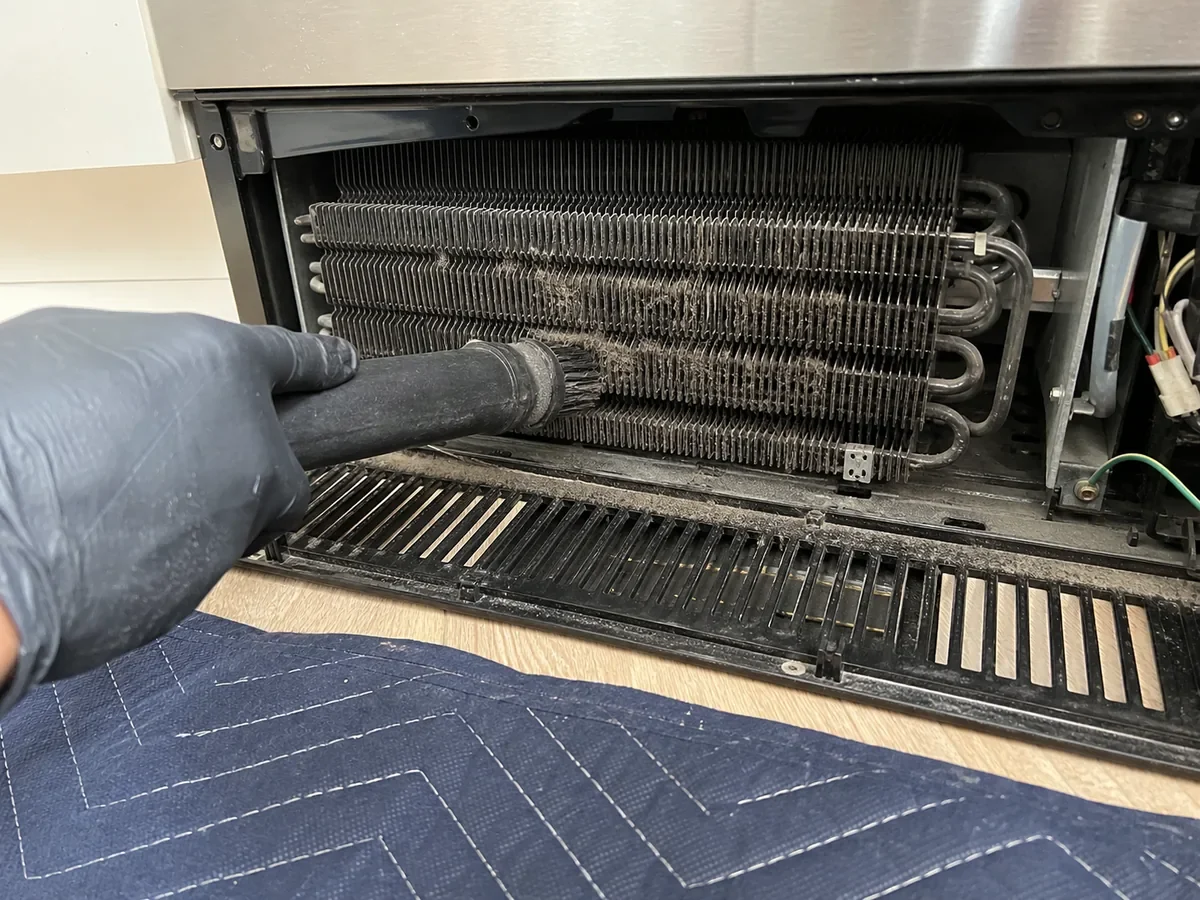
Left alone through a foothill summer, a condenser caked with dust and pet hair forces the compressor to work at the edge of its envelope week after week, and that's where sealed-system trouble starts. Most of the August emergency calls we take could have been a ten-minute cleaning in May.
The one step that pays for itself
Clean the condenser before the heat arrives. On most Sub-Zero built-ins the coil and condenser sit behind the upper grille, and a season of dust on it is the single biggest reason a unit overheats in a Los Altos Hills summer. A yearly cleaning, ideally in late spring, keeps the compressor running cool through the worst of it.
We handle this as part of a maintenance visit and check the door gaskets and airflow clearances at the same time. Call us or book online — the $89 service call goes toward any repair if the visit turns one up.