
The cooking call we field most often from Los Altos Hills isn't a dead burner — it's a Wolf oven that's quietly off temperature. Cookies brown too fast on one bake and come out pale the next; a roast that always worked now needs an extra twenty minutes. In a town where the kitchens are built around serious cooking, that drift gets noticed quickly.
The good news is that an oven baking hot or cold is almost never a failed oven. It's one of two bounded, fixable things.
Calibration drift versus a tired sensor
Every Wolf oven reads its own cavity through a temperature sensor and holds the setpoint from there. Two things throw that off. The first is calibration drift: over years of heavy use the oven's idea of "350" slides a little, and Wolf lets a technician offset it back to true. The second is the sensor itself — when it ages and starts feeding slightly wrong readings to the control, the oven over- or under-shoots to chase a target that isn't real.
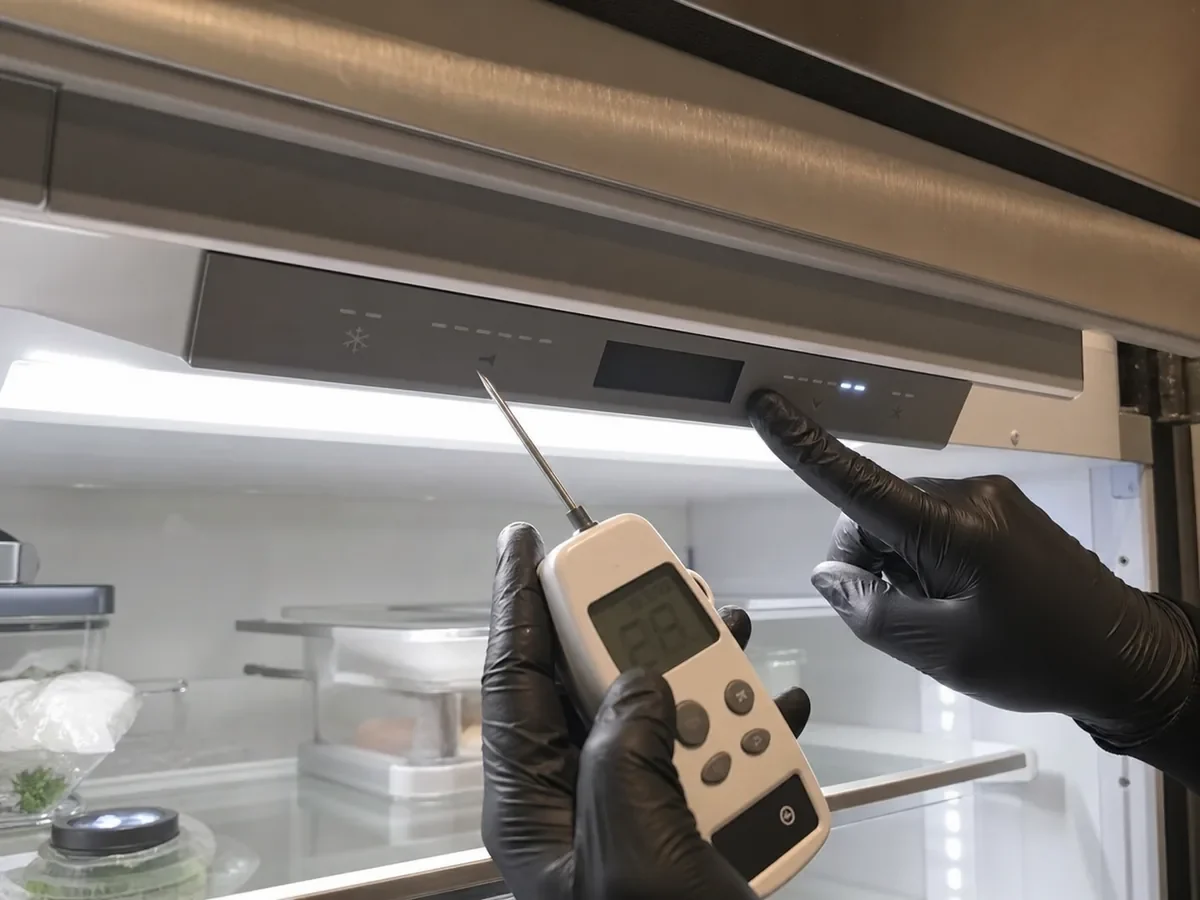
Telling them apart is the whole job. We put a calibrated thermocouple in the cavity, run it through a couple of cycles, and watch how the actual temperature tracks against the setpoint. A steady offset points to calibration; readings that wander or overshoot point to the sensor.
What the fix looks like
If it's calibration, the correction takes minutes and no parts — we offset the oven back to true and verify it across the range you actually cook at. If the sensor has drifted, it's a clean swap with a genuine Wolf part, and we re-verify afterward so you're not taking the readout on faith.
Either way we test before we replace anything, so you're not paying for a sensor when a calibration would have done it. Wolf builds cooking equipment to last, and a temperature complaint rarely means the oven is finished — it means it needs to be brought back to true.